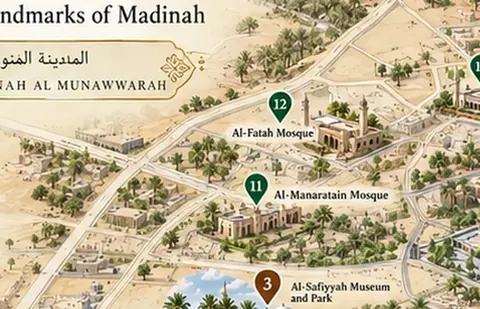
Historic Mosques
Al-Fath Mosque
مسجد الفتح
A mosque associated with the Khandaq area and the events of the Battle of the Trench.
Explore place →
On the western side of Mount Sela stands a group of small mosques known as the Seven Mosques. Tradition connects them with the Battle of the Trench, when the Muslims defended Madinah by digging a trench across its open northern approach.
The Companions dug the trench while the Prophet ﷺ worked with them, carrying earth and praying: “O Allah, there is no life except the life of the Hereafter, so forgive the Emigrants and the Ansar” (Sahih al-Bukhari 4098).
When the diggers struck a large rock they could not break, they called the Prophet ﷺ. He came down into the trench, though he had a stone tied over his stomach from hunger after days without food, and struck the rock with the spade (Sahih al-Bukhari 4101).
The best known of the group is Masjid al-Fath, on the slope of Mount Sela. The others carry the names of Companions, such as Salman al-Farisi, Abu Bakr, ‘Umar and ‘Ali. Their connection with particular positions during the siege comes from later historical tradition, and lists of the mosques differ; the name “Seven Mosques” is itself traditional.
We label these associations as tradition rather than established fact. The digging of the trench and the siege are firmly established in the hadith; the exact identification of each small mosque is not.
The name is traditional. Lists of the mosques differ, and their links with positions during the Battle of the Trench come from later historical tradition.
A mosque associated with the Khandaq area and the events of the Battle of the Trench.
Explore place →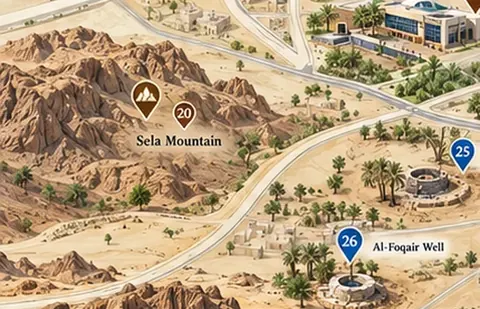
A prominent mountain tied to the geography of early Madinah and the Khandaq area.
Explore place →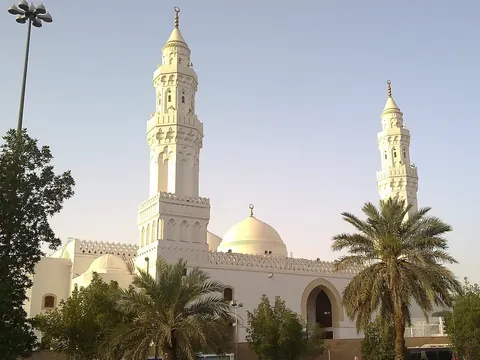 Photo: Aiman titi · CC BY-SA 3.0
The Mosque of the Two Qiblahs, associated in Seerah reports with the change of the qiblah from Jerusalem to the Ka‘bah.
Explore place →